
If you manage a service fleet or run a work truck in Oregon, understanding wrap pricing before you start calling shops puts you in a better position. Truck wrap pricing depends on several variables: vehicle size, vinyl film quality, coverage level, and design complexity. Full vehicle wraps generate 30,000–70,000 impressions daily — which is why fleet wrapping has become a standard branding tool for service businesses across the country. This guide covers realistic pricing ranges for partial wraps, full wraps, color-change wraps, pickup trucks, and larger commercial vehicles. The goal is to give fleet managers and owner-operators a working budget before they start getting quotes.
How Much Does It Cost to Wrap a Truck? Complete Pricing Guide
Wrapping a truck is one of the most practical ways to brand a commercial vehicle and protect its factory paint at the same time. Businesses across Oregon use vinyl wraps on service trucks, contractor pickups, vans, and fleet vehicles to generate brand exposure on every route, every job site, and every neighborhood their trucks travel through.
Truck wrap pricing typically ranges from around $500 for a simple partial wrap to $5,000 or more for a full wrap on a full-size commercial vehicle, with custom graphics. That spread reflects differences in truck size, vinyl material quality, coverage area, and design complexity. Basic cut vinyl graphics — logo decals, door lettering, or a simple name-and-number layout — can start below $500 and represent the most accessible entry point for businesses branding their first vehicle.
Understanding what drives wrap cost helps fleet managers make smarter decisions about coverage level, design choices, and scheduling. The sections below break down average price ranges for different wrap types, how pickup truck size affects pricing, and the key factors that push costs up or down. The goal is a clear picture of what to expect before walking into a shop.
Average Cost to Wrap a Truck
For most service trucks and commercial pickups, the average cost to wrap a truck falls between $1,500 and $5,000, depending on coverage and design. That range covers three main categories: partial wraps, full wraps, and single-color wraps. Each serves a different purpose and carries a different price point. Basic vinyl graphics packages, which include cut lettering or simple decals rather than printed film coverage, typically fall in the $200 to $500 range and are a common starting point for single-vehicle service businesses.
The type of vinyl film also plays a role. Cast vinyl is engineered for long-term outdoor use, conforms well to complex body panels, and is the standard for commercial vehicle wrapping. Calendered film is thicker, less flexible, and better suited for flat panels and shorter-term applications. Installers factor film type into their pricing, which is part of why estimates can vary between shops even for identical trucks.
For Oregon fleets, the combination of consistent rain, road debris, and occasional summer UV exposure makes film quality a meaningful long-term variable. Choosing a lower-grade material to save money upfront often leads to premature edge lifting, fading, or difficult removal later.
Partial Truck Wrap Pricing
Partial wraps cover specific sections of the truck rather than the entire surface. Common coverage areas include door panels, tailgates, rear box sides, cab quarters, and hood sections. Because less vinyl is required and installation time is shorter, partial wraps carry the lowest cost of the three main wrap types.
For a standard service pickup or work truck, partial wrap pricing commonly ranges from $500 to $2,000, depending on coverage area and design complexity. A simple door logo with a phone number and company name sits at the lower end, and for businesses that only need cut vinyl lettering without a printed background, basic graphics packages can fall below $500 entirely. A half-wrap with a full background color, branded graphics, and rear panel coverage moves toward the higher end.
Partial wraps work particularly well when a truck already has a clean factory color that can be incorporated into the design. The contrast between the base paint and the graphic area can create a sharp, intentional look without the cost of full coverage. For fleets managing multiple vehicles or working with tighter budgets, partial graphics offer a cost-effective entry point into professional branding. They also make targeted updates easier: changing a phone number or service area on a partial wrap costs significantly less than replacing an entire full wrap.
Full Truck Wrap Pricing
A full wrap covers nearly every painted surface on the truck: doors, cab, bed, hood, bumpers, and lower panels. It delivers maximum brand visibility and creates a consistent, professional appearance across a fleet when applied uniformly to multiple vehicles.
For commercial service pickups, full wrap pricing typically falls between $2,500 and $5,000, with larger trucks and more detailed designs pushing toward the upper end. Box trucks and extended commercial vehicles run higher depending on total surface area.
Full wraps also provide the most complete layer of paint protection. The vinyl film acts as a barrier against UV exposure, minor road debris, and surface abrasion during daily use. When the wrap is eventually removed, the factory paint underneath is often in noticeably better condition than an unwrapped truck of the same age. That difference matters for fleet rotation and trade-in value.
Because full wraps involve more material, more installation time, and precise panel alignment, they require experienced installers and thorough surface preparation. Quality cannot be cut at either stage without affecting how the wrap performs and how long it lasts.
One-Color Truck Wrap Pricing
Single-color wraps, sometimes called color-change wraps, apply a uniform vinyl film across the truck body without custom graphics or branding. They appeal to businesses that want a clean, consistent fleet appearance or to owner-operators who want to change their truck’s color without a permanent repaint.
One-color wrap pricing typically ranges from $1,500 to $3,500 for a full-size pickup, depending on truck size and vinyl finish. Matte, satin, and gloss options are widely available. Specialty finishes like carbon fiber texture, brushed aluminum, or color-shift film run higher due to material pricing.
Compared to repainting a truck in a new color, a single-color vinyl wrap is generally less expensive, requires less downtime, and can be removed cleanly when the vehicle changes hands or the business rebrands. For fleet managers who rotate vehicles, that reversibility is a significant operational advantage. Color-change wraps also preserve the factory finish underneath, which matters at resale.
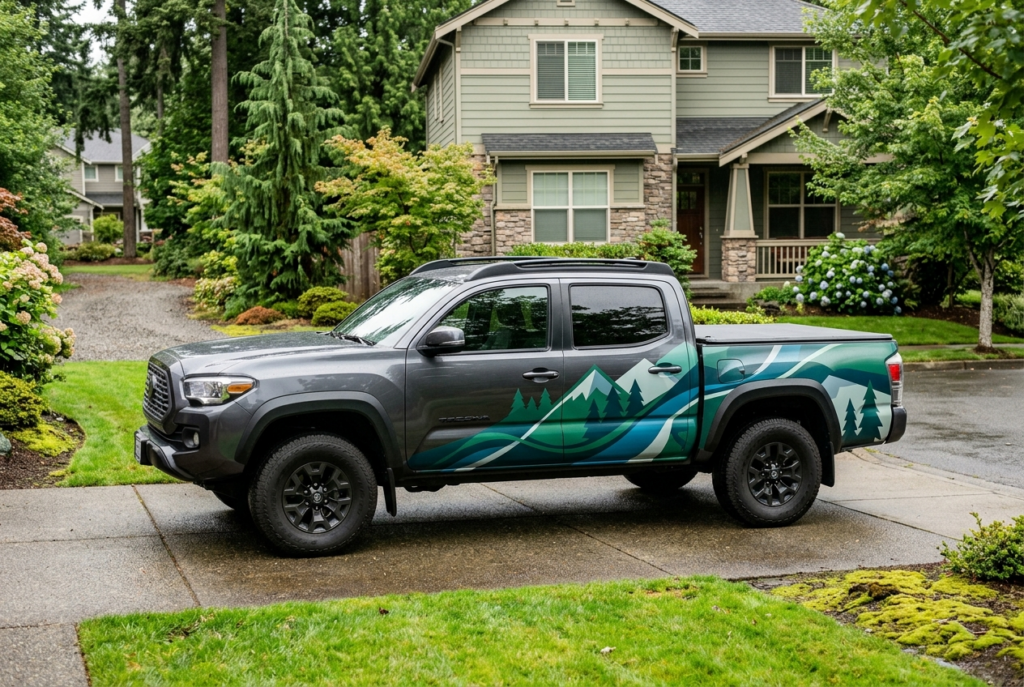
How Much Does It Cost to Wrap a Pickup Truck
Pickup trucks are among the most commonly wrapped commercial vehicles in Oregon. They’re visible at job sites, in neighborhoods, on highway runs, and in parking lots every day. For service businesses, a wrapped pickup is a working branding asset that pays back on every mile.
Pricing for pickup truck wraps depends on whether the vehicle is a mid-size model, a standard full-size pickup, or an extended cab configuration. Larger trucks require more vinyl film and more installation time. Design complexity adds to that baseline regardless of truck size.
Mid-Size Pickup Wrap Cost
Mid-size pickups like the Ford Ranger, Toyota Tacoma, and Chevrolet Colorado have smaller overall footprints than their full-size counterparts. Shorter beds, narrower cab sections, and less body panel real estate reduce both material requirements and installation time.
For a mid-size truck, partial wrap pricing often starts around $500 to $1,200, while a full wrap typically falls in the $2,000 to $3,500 range depending on design. These trucks are common in landscaping, pest control, HVAC, and light contracting fleets where daily mileage is high and a professional appearance matters throughout the workday.
Mid-size pickups are often more predictable to wrap than larger commercial vehicles, which can support more consistent installation timelines for fleet managers scheduling multiple vehicles. For mixed-size fleets, mid-size trucks frequently represent the most efficient entry point for coordinated branded wraps.
Full-Size Pickup Wrap Cost
Full-size pickups — the Ford F-150, Ram 1500, Chevrolet Silverado, and their heavy-duty variants — are the workhorses of most service fleets. Larger panels, longer beds, and extended cab configurations add surface area that increases both material consumption and installation time compared to mid-size trucks.
For a standard full-size pickup, full wrap pricing typically ranges from $2,500 to $5,000. Extended and crew cab configurations sit at the higher end due to additional door and rear cab panels. Lifted trucks or vehicles with aftermarket body modifications may require additional labor for proper panel alignment and edge work.
Wrapping a full-size truck in a professional installation includes surface cleaning, degreasing, panel-by-panel alignment, and heat-forming vinyl around curved and recessed areas. Each step requires time and skill. Installation quality at the edges, seams, and panel transitions is what separates a wrap that lasts seven years from one that starts peeling in two.
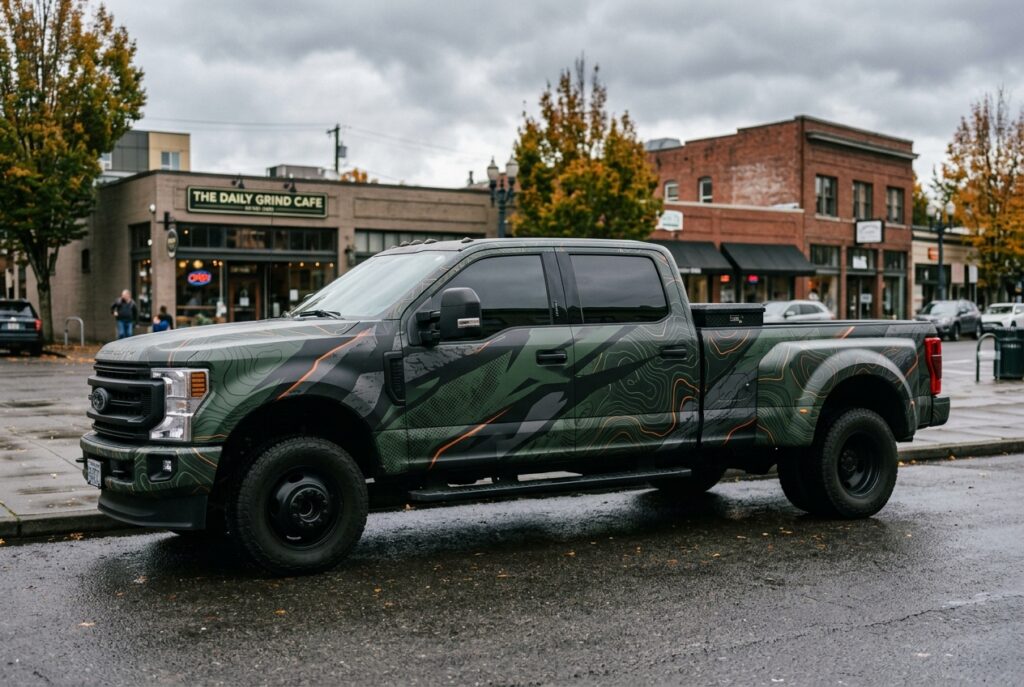
How Much Does It Cost to Wrap a Full Size Truck
For full-size trucks used in commercial work, pricing follows similar logic to full-size pickups but can extend higher depending on vehicle configuration and scope. Heavy-duty trucks used by contractors, utility companies, and service fleets often carry custom body configurations that affect material layout and installation time.
Extended service bodies, ladder racks, toolbox covers, and utility compartments create irregular surfaces that require additional wrap layout and precision from the installer. These details are assessed during the estimate process, which is one reason reputable shops quote in person rather than over the phone.
Cost for Work Trucks and Service Trucks
Service trucks operated by plumbers, electricians, HVAC technicians, and general contractors tend to have specific wear patterns: doors that open dozens of times per day, cargo areas that contact tools and equipment regularly, and lower panels that accumulate road debris and grime on working routes.
For contractor and utility trucks operating in Oregon, truck wrap pricing for standard service configurations typically falls between $2,500 and $5,500, depending on body type, coverage level, and design. That range accounts for surface preparation, quality vinyl film, and professional installation on vehicles that see hard daily use.
Beyond branding, wrapping a work truck provides a protective layer that absorbs minor scuffs and debris impacts that would otherwise chip or scratch the factory finish. For high-mileage vehicles in regular service, that protection carries real dollar value at trade-in or fleet rotation.
Cost for Larger Commercial Trucks
Extended cab configurations, service bodies with built-in storage, utility racks, and mounted equipment all increase surface area and installation complexity. Full-size trucks with non-standard body builds require custom vinyl layout and additional precision work during installation.
For larger commercial vehicles in these configurations, wrap pricing can range from $4,000 to $7,000 or more, depending on total surface area and whether the project involves multi-color designs or detailed custom graphics. Box trucks and large commercial vans typically fall in a similar range.
Surface preparation becomes especially important with larger trucks. Irregular panels, existing surface damage, and aftermarket additions require careful pre-installation assessment. Vinyl applied over a contaminated, uneven, or improperly cleaned surface will not adhere correctly, leading to premature lifting or bubbling that shortens wrap life and creates additional cost. Experienced installers identify these issues during the consultation and factor them into the project scope.
Factors That Affect Truck Wrap Cost
No two wrap projects cost exactly the same. Understanding the variables that drive pricing helps fleet managers budget accurately and compare installer quotes on equal footing. The five main factors that influence overall wrap cost are vehicle size, coverage level, design complexity, vinyl material quality, and installation experience.
Vehicle Size and Body Shape
Larger trucks require more vinyl film, more installation time, and more precision during application. A full-size crew cab pickup has significantly more surface area than a mid-size regular cab, and that difference shows directly in material and labor costs.
Trucks with pronounced body lines, flared fenders, and complex curves require additional skill during wrapping to avoid stretching or tearing the film at transition points. Installers often account for difficult body geometry in their estimates because mistakes in those areas waste material and require rework. Any reputable shop will assess the truck’s body in person before quoting a final price.
Wrap Coverage
Coverage level is one of the clearest drivers of wrap pricing. A full wrap that covers every painted panel costs more than a partial wrap focused on doors and tailgate. The difference is not only material: installation time increases significantly with coverage.
Partial wraps can be highly effective for branding purposes, particularly when designed to work with the truck’s existing color. A well-designed partial graphic on a clean factory-color truck can generate strong visual impact at a fraction of full coverage cost. For fleets managing multiple vehicles on tight timelines, partial wraps also allow faster turnaround and more predictable scheduling across the full install cycle.
Design Complexity
Custom graphics, multi-color gradients, photographic elements, and detailed lettering all increase design production time and, in some cases, installation time. A simple logo-and-contact-info layout is faster to design and produce than a full-color branded background with custom imagery.
For most service fleets, clean and readable designs are the most effective choice regardless of budget. A truck name, service category, and phone number placed on a high-contrast background performs well on the road without unnecessary complexity. More detailed designs carry additional value for high-visibility fleets or businesses in competitive service markets where visual differentiation matters.
Design fees vary between shops. Some installers include basic layout work in their pricing; others charge separately for design development. Clarifying this upfront helps avoid budget surprises.
Vinyl Material Quality
Not all vinyl wrap film performs the same way in commercial applications. The two main categories are cast vinyl and calendered vinyl. Cast vinyl film is thinner, more conformable, and engineered for long-term outdoor exposure. It handles curves and complex body panels more cleanly and typically carries a longer manufacturer warranty. Calendered film is thicker, less flexible, and best suited for flat panels and shorter-term applications.
For Oregon service trucks that spend full days on the road, cast vinyl is the more appropriate material. It lasts longer, applies more cleanly across complex surfaces, and removes more predictably at the end of its useful life. Wrap removal from quality cast film is significantly cleaner than removing degraded calendered film that has baked in summer sun over several seasons.
Installers who quote lower prices sometimes factor in lower-grade materials. Asking about film brand, grade, and warranty during the estimate process is always a worthwhile conversation.
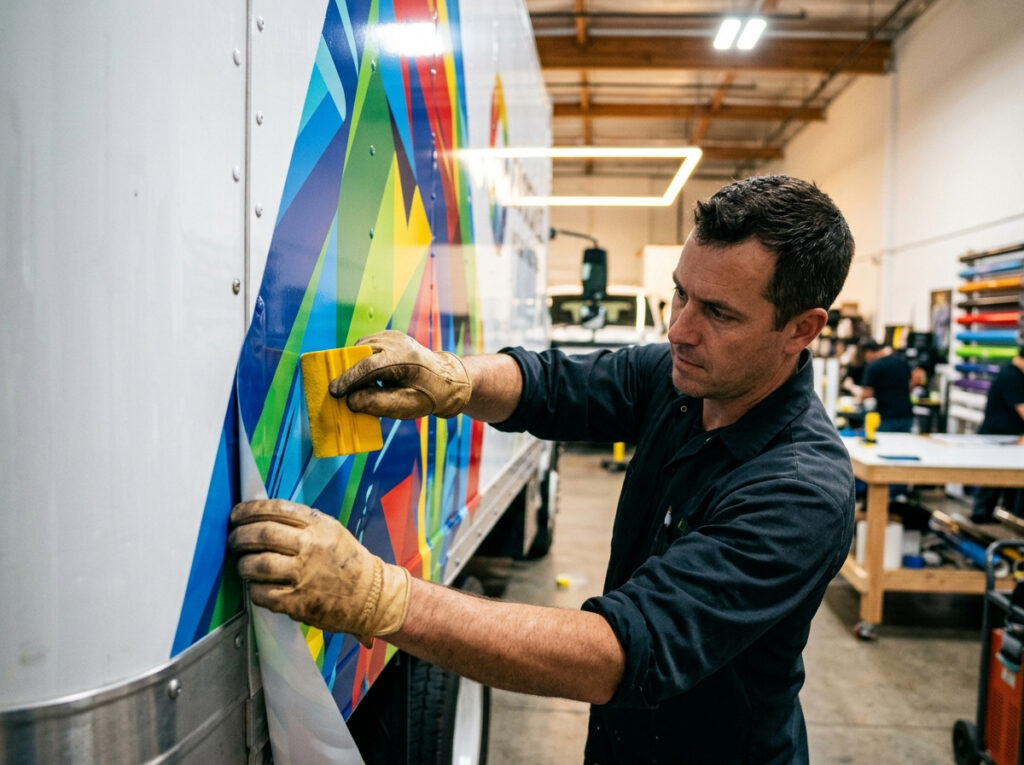
Professional Installation
Professional installation is not a place to cut costs. An experienced installer brings the tools, technique, and knowledge of panel geometry needed to apply vinyl correctly across every surface. Poorly installed wraps bubble, lift at edges, and fail prematurely regardless of how good the film is.
Surface preparation is foundational to installation quality. Cleaning, degreasing, and inspecting the truck before any vinyl is applied affects adhesion and long-term durability. Edges, seams, and recessed areas require heat forming and careful finishing to prevent moisture infiltration over time.
For fleet managers, installation quality also matters at wrap removal. Professionally applied vinyl on a properly prepared surface removes cleanly, leaving the factory paint intact. Improperly installed wraps can pull paint or leave adhesive residue, creating additional cost and downtime at replacement time.
Truck Wrap vs Paint: Which Is Cheaper
For most commercial vehicles, wrapping costs less than a professional repaint when total project cost, downtime, and long-term flexibility are considered together. A basic paint job may look comparable to a partial wrap at first glance, but professional-quality paint work on a work truck involves surface prep, primer, color coats, clear coat, and curing time that drive the price up quickly.
Repainting also requires addressing dents, rust, and surface imperfections before any paint can be applied. Work trucks almost always carry some level of cosmetic wear from regular service, and that prep adds meaningful labor cost. For commercial vehicles with existing graphics or lettering, paint matching and blending across panels adds further complexity.
Vinyl wraps are applied over the existing finish with less prep required. Vehicles can return to service within a day or two of installation with no curing period. For fleets with tight scheduling and consistent revenue demands, that operational efficiency has direct value.
Paint is permanent. Changing a color or updating graphics on a painted truck requires starting the process over. Vinyl wraps can be removed or refreshed as branding evolves, vehicles change hands, or service offerings expand. For service businesses that expect to grow and change over the life of their fleet, that flexibility is a meaningful practical advantage. For most commercial applications, wrapping delivers stronger overall value than paint.
How Long a Truck Wrap Lasts
A professionally installed vinyl wrap on a commercial truck typically lasts five to seven years under normal service conditions. That range reflects real-world fleet use rather than controlled storage scenarios.
Driving frequency, parking habits, and maintenance all affect where a specific wrap lands within that window. A work truck stored indoors and washed regularly will maintain color and adhesion longer than one parked outside year-round under direct sun. Oregon’s climate, with consistent rain seasons and periodic summer UV exposure, is generally manageable for quality cast film when vehicles are maintained properly.
Several practices extend wrap life in commercial conditions. Hand washing with mild soap and a soft cloth avoids the abrasion caused by automated brush washes, which can lift edges over time. Removing tree sap, bird droppings, and road salt promptly prevents surface degradation and adhesion breakdown. Inspecting seams, edges, and high-contact areas periodically allows small issues to be addressed before they expand.
When a wrap approaches the end of its useful life, common signs include fading color, visible surface cracking on flat horizontal panels, and edge lifting near handles, trim, or panel seams. Addressing wear before the film fully degrades makes removal cleaner and protects the factory paint underneath. Planning refresh cycles in advance, rather than waiting for visible failure, keeps fleet vehicles looking professional and on schedule.
Are Truck Wraps Worth the Cost for Businesses
For service companies and fleet operators, wrap cost needs to be evaluated against what that wrap delivers over its useful life. A wrapped truck is not just a vehicle — it is an advertising asset that generates impressions on every route it travels. The question is not whether wraps are expensive but whether they produce value relative to other marketing investments. For most service businesses operating locally in Oregon, the math is clear: trucks already cover the same routes every day, and wrapping them turns that mileage into continuous brand exposure at a one-time cost.
Mobile Advertising Benefits
A wrapped service truck acts as a rolling advertisement across every neighborhood, job site, highway stretch, and parking lot it moves through. Unlike static signage or digital ad placements that require ongoing spend to stay visible, a truck wrap generates impressions continuously from installation through its full working life.
Industry research on out-of-home advertising consistently positions vehicle graphics as one of the lowest cost-per-impression formats available to local businesses. A single wrapped truck traveling normal service routes can reach thousands of people per week in residential and commercial areas. For contractors, HVAC companies, plumbers, and other field service businesses, the majority of those impressions land directly in their target service territory, making each one more relevant than a broad digital placement.
Cost Per Impression Compared to Ads
When wrap cost is divided across its useful life and total estimated impressions, the math typically favors vehicle graphics over most traditional advertising formats. A truck wrap installed for $3,000 that remains in service for five years costs roughly $50 per month. Over that period, it generates brand exposure on every run, every service call, and every commute.
Compare that to ongoing costs for paid digital ads, print placements, or directory listings that require consistent monthly spend to stay visible. Wraps are a one-time investment with a multi-year return. For fleet managers evaluating marketing budgets, vehicle wraps often deliver one of the strongest returns on investment available, particularly for service businesses operating in defined geographic areas where truck routes align directly with target customers.
Brand Visibility for Service Companies
For contractors, delivery operations, pest control businesses, and other field service companies, brand visibility directly affects customer recognition and referral frequency. When neighbors see the same wrapped truck in a driveway repeatedly, the brand becomes familiar. Familiarity builds trust, and trust drives inbound calls.
A single wrapped truck makes an impression. A fleet of consistently wrapped trucks signals a well-established, credible operation. Fleet managers who invest in consistent vehicle graphics build a recognizable presence in their service territory that is difficult to replicate through digital channels alone.
For newer businesses in competitive service markets, a professionally wrapped truck communicates credibility before anyone picks up the phone. The visual impression made at the job site, on the road, and in the neighborhood often precedes any other form of brand contact a potential customer has with the business.
Getting a Professional Truck Wrap Installation
Choosing the right installation partner matters as much as choosing the right film. An experienced wrap shop assesses the truck in person, recommends appropriate coverage for the application, produces a design that works at scale across the vehicle’s actual panel configuration, and installs correctly the first time.
For fleet managers in Oregon, Pacific Truck Colors specializes in commercial vehicle wrapping for service trucks, pickups, vans, and larger commercial vehicles. The process starts with a consultation to understand the business, the vehicles, and the branding goals, then moves into design development and installation.
Professional-grade tools, trained installers, and quality vinyl film are the foundation of a wrap that performs well throughout its service life. The difference between professional and amateur installation shows at the edges, the seams, and the way graphics align across panel breaks. It also shows years later when the wrap is removed and the factory paint underneath is intact.
If you’re evaluating truck wraps for a single service truck or a full Oregon fleet, Pacific Truck Colors can walk you through options, pricing, and timeline. The goal is a finished product that works hard on the road for years.
