
For service truck drivers and fleet managers, updating a work vehicle is rarely about looks alone. It is a business decision that affects operating costs, scheduling, and how your company shows up on the job. One of the most common questions that comes up during that process is a simple one: Is it cheaper to wrap or paint a car?
For most work vehicles, wrapping is usually cheaper than painting once labor, downtime, and long-term flexibility are factored in. That is why vinyl wraps have become a popular option for service trucks, vans, box trucks, and fleet vehicles that need to stay on the road and represent a brand every day.
Cost is often the starting point, but it is not the only consideration. Durability matters when vehicles are exposed to job sites, weather, and daily wear. Downtime matters when a truck is off the road means missed work or delayed service calls. Branding matters when a vehicle doubles as advertising every time it pulls into a driveway or job site.
This guide breaks down vehicle wrapping versus painting from a real-world, commercial perspective. It looks at how each option compares in terms of cost range, durability, maintenance, downtime, branding flexibility, and long-term business value for working vehicles used across Oregon. The goal is to help you choose the option that supports your operation, not just the one with the lowest upfront price.
Is It Cheaper to Wrap or Paint a Car?
In most commercial use cases, wrapping is cheaper than painting, especially for service trucks and fleet vehicles that are used every day. That is because vinyl wraps typically require less labor, less surface prep, and far less downtime than a professional paint job.
For working vehicles, the true cost is not just the finish itself. It is also the time a truck spends off the road and the flexibility needed as branding, services, or fleet size change. Wraps are installed faster, allow vehicles to return to service immediately, and make it easier to update or remove graphics later on.
That said, there is no single answer that applies to every vehicle. The better option depends on how the truck is used, how long it needs to stay branded, and whether permanence or flexibility is the priority. Some fleets value long-term color correction, while others need branding that can evolve over time.
The sections below break down the real differences between wrapping and painting for work trucks and fleets, including cost drivers, durability, downtime, maintenance, branding value, and resale considerations.
Vinyl Car Wrap Cost Compared to Paint
When businesses compare options, vinyl car wrap cost is often the first place they look. For commercial vehicles, wraps generally fall into a lower and more predictable cost range than professional paint jobs, especially once scale and downtime are considered.
For most service trucks and fleet vehicles, a full vinyl wrap typically costs less than a high-quality repaint. Wrap pricing varies, but commercial wraps are usually priced based on surface area and design complexity rather than the condition of the existing finish. That alone removes many hidden costs associated with painting work trucks.
Several factors influence car wrap cost for commercial vehicles:
Vehicle size and body type
Box trucks, service bodies, and high-roof vans require more material and labor than pickups. Even so, wrapping large commercial vehicles is often still less expensive than repainting them. Wrap pricing scales more predictably with size than paint does.
Coverage level
Full wraps cost more than partial wraps, but even full coverage is often less expensive than repainting an entire vehicle. Many fleets choose partial wraps focused on doors, box sides, or high-visibility areas to manage costs while still maintaining strong branding.
Design complexity
Simple color changes or logo layouts cost less than highly detailed designs with gradients or photography. For service fleets, clean and functional designs tend to be both cost-effective and easier to maintain.
Installation labor
Car wrapping requires surface cleaning and prep, but does not involve sanding, body filler, or curing time like paint. This reduces labor hours and shortens installation timelines.
By comparison, paint pricing increases quickly once surface prep is required. Work trucks often need dent repair, rust treatment, sanding, and masking before paint can begin. A basic paint job may appear cheaper at first, but professional-grade results for commercial vehicles typically cost more once durability and finish quality are considered.
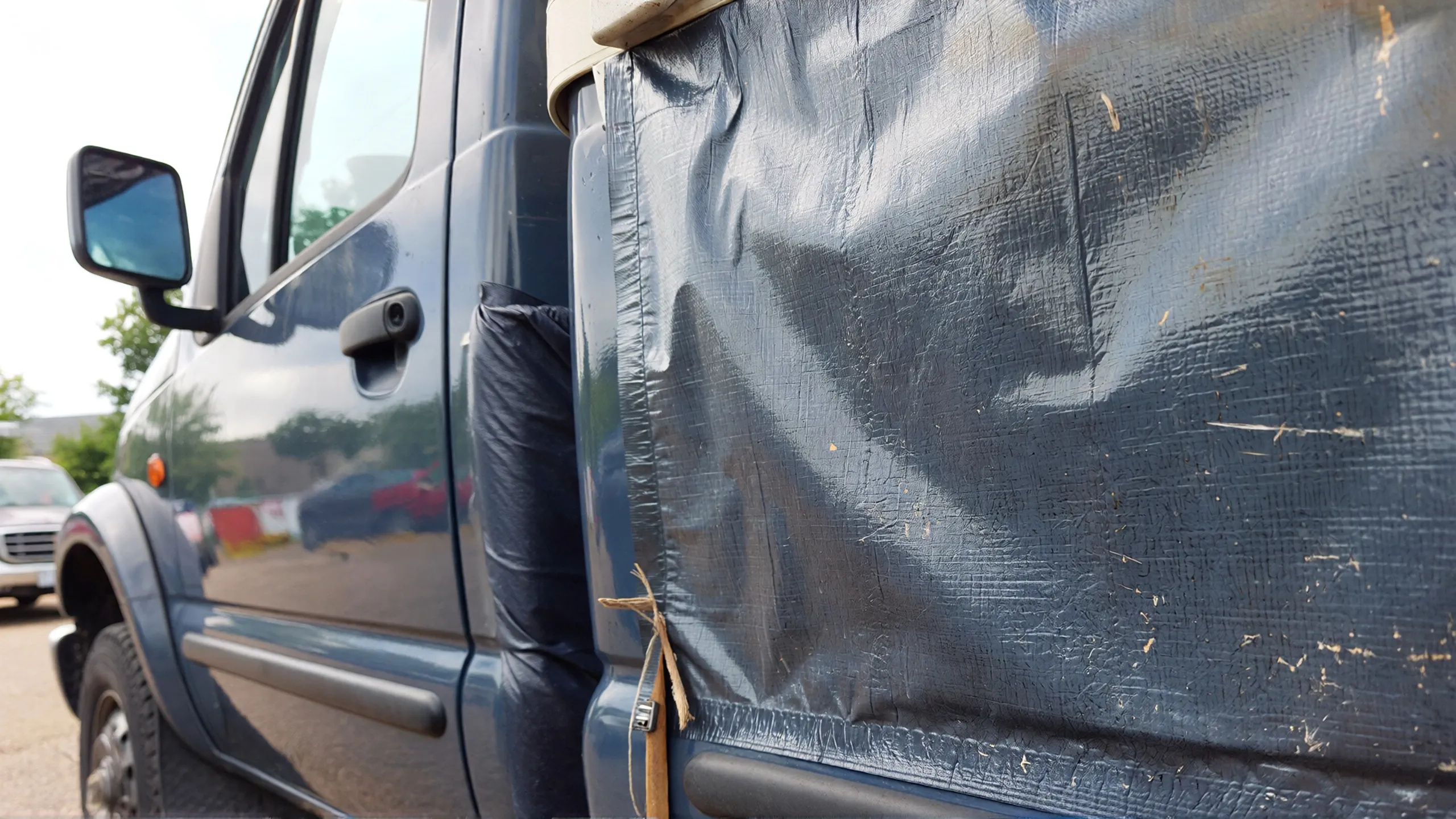
Car Paint Cost and What Impacts Pricing
When evaluating car paint cost for commercial vehicles, pricing is rarely straightforward. Paint jobs vary widely because much of the cost is tied to labor, prep, and time rather than just materials.
Surface preparation is one of the biggest cost drivers. Unlike wrapping, painting requires the surface to be near perfect. Dents, scratches, rust, and uneven panels must be addressed before paint is applied. For service trucks that see daily wear, this prep work can add significant labor and expense.
Application time also matters. Professional paint jobs involve multiple stages, including base coats, clear coats, and drying time between layers. Skilled labor is required to achieve consistent coverage on large or complex commercial vehicles.
Materials and finish quality further affect cost. Commercial-grade paints, clear coats, and specialty finishes increase expenses. While these finishes can look sharp, they are not always practical for working vehicles that prioritize function over appearance.
Curing time adds another layer of cost. Painted vehicles often need additional time before returning to service to avoid damaging the finish. For fleets, extended downtime across multiple vehicles can disrupt operations and scheduling.
Because of these variables, paint job pricing can escalate quickly, which is why professional paint work for commercial trucks often costs more than expected.
Durability and Lifespan: Wrap vs Paint
Durability matters for work trucks that spend long days on the road and at job sites. Both wraps and paint can perform well, but they age differently in commercial use.
A vinyl wrap typically lasts five to seven years when properly installed and maintained. High-quality vinyl is engineered to withstand UV exposure, rain, and temperature swings common in commercial environments. Minor scratches usually affect only the vinyl, not the vehicle underneath. According to Cars.com, vinyl wrap lifespan commonly falls in the three-to-seven-year range, with longevity influenced by film quality, installation, climate, and maintenance practices, particularly regular washing and sun exposure.
A paint job can last longer in theory, often ten years or more, but real-world commercial use shortens that lifespan. Chips, fading, and scratches are common on work trucks, particularly in high-contact areas like doors, ladders, racks, and cargo boxes. Once paint is damaged, repairs are permanent and often visible.
Wraps also provide an added layer of paint protection. The vinyl acts as a barrier against UV exposure and surface wear. When a wrap is removed, the original paint is often in better condition than an unwrapped vehicle of the same age. This can help preserve resale value and give fleets more flexibility when rotating vehicles.

Downtime and Business Impact
Downtime is often more expensive than the finish itself. Every day a truck is off the road can mean lost revenue, missed service calls, or delayed projects.
Vinyl wraps typically require only a few days for installation, depending on vehicle size and design. Once installed, vehicles can return to service immediately. There is no curing period.
Paint jobs take longer. Prep work, application, drying, and curing extend downtime. During that time, trucks often sit idle to protect the finish.
For fleets, this difference adds up quickly. Wraps allow staggered installs and faster turnaround, keeping more vehicles in service and reducing operational disruption.
Maintenance and Repair Considerations
Ongoing maintenance is another area where wraps and paint differ for commercial vehicles.
Wrapped vehicles are relatively easy to maintain. Regular washing with mild soap keeps graphics clean and readable. If a section is damaged, individual panels can often be rewrapped without touching the rest of the vehicle.
Painted vehicles require more careful long-term maintenance. Scratches, chips, or fading usually require repainting entire panels to restore appearance. Matching paint color over time can be difficult, especially on older vehicles.
For fleets focused on keeping trucks looking professional without constant refinishing, wraps often offer a more manageable maintenance path.
Branding, Flexibility, and Long-Term Value
Work vehicles act as mobile advertising. This is where wraps offer a clear advantage.
Nielsen out-of-home advertising data shows that branded vehicles can generate tens of thousands of impressions per day, making fleet graphics one of the most cost-efficient forms of local advertising for service businesses.
Wraps allow businesses to update, remove, or refresh branding without permanent changes. Phone numbers, service offerings, or logos can be adjusted as the company grows. When a truck is replaced or reassigned, the wrap can be removed without damaging the underlying finish.
Paint is permanent. Changing it requires sanding and repainting, which adds cost and downtime.
This is why many businesses choose commercial vehicle wraps as a strategic branding tool rather than a one-time appearance upgrade.
Resale value also matters. Trucks with original paint preserved under a wrap are often easier to sell than permanently painted vehicles. Buyers tend to prefer neutral finishes that can be branded to their own needs.
Environmental and Operational Considerations
Environmental impact is another factor fleets consider. Paint processes involve solvents, overspray, and ventilation requirements. Vinyl wrapping generally produces less waste during installation and avoids airborne paint particles.
From an operational standpoint, wraps also allow branding work to be completed without extensive body shop involvement. This simplifies scheduling and coordination for fleet managers.
When Paint Still Makes Sense
Although wraps are often the better option, paint can still make sense in specific situations.
Paint may be appropriate when:
- A vehicle requires extensive body repair already
- Permanent color correction is needed
- Branding is minimal or not required
- The vehicle will remain in service long-term without changes
In these cases, paint can be a practical solution when flexibility is not a priority.

Final Recommendation for Work Trucks and Fleets
For most service trucks and fleets, wrapping is the better overall choice when cost control, uptime, and flexibility matter. Wraps are often cheaper upfront, require less downtime, and allow branding to evolve as business needs change. They also help protect original paint, supporting resale value over time.
Wrapping makes the most sense when:
- Vehicles generate revenue daily
- Branding may change over time
- Fleets want consistent appearance
- Resale value matters
Paint still has its place, but for many commercial operations, wraps provide a stronger return on investment.
If you are weighing wraps versus paint for a work truck or fleet, Pacific Truck Colors can help evaluate your goals, timeline, and budget to recommend the right solution.
